
Are You a Candidate for RECARTA? A 5-Point Checklist
Cartilage cell therapy can be highly effective when appropriately selected for a specific knee condition. However, in some cases, this treatment may not be suitable. Careful and honest patient selection is often what determines whether the outcome will be successful. Before spending a significant amount of time researching the treatment, answer the following five questions. They will help you make a preliminary assessment of whether RECARTA is worth discussing with an orthopaedic surgeon. If you answer "yes" to at least three questions, it is worth exploring further

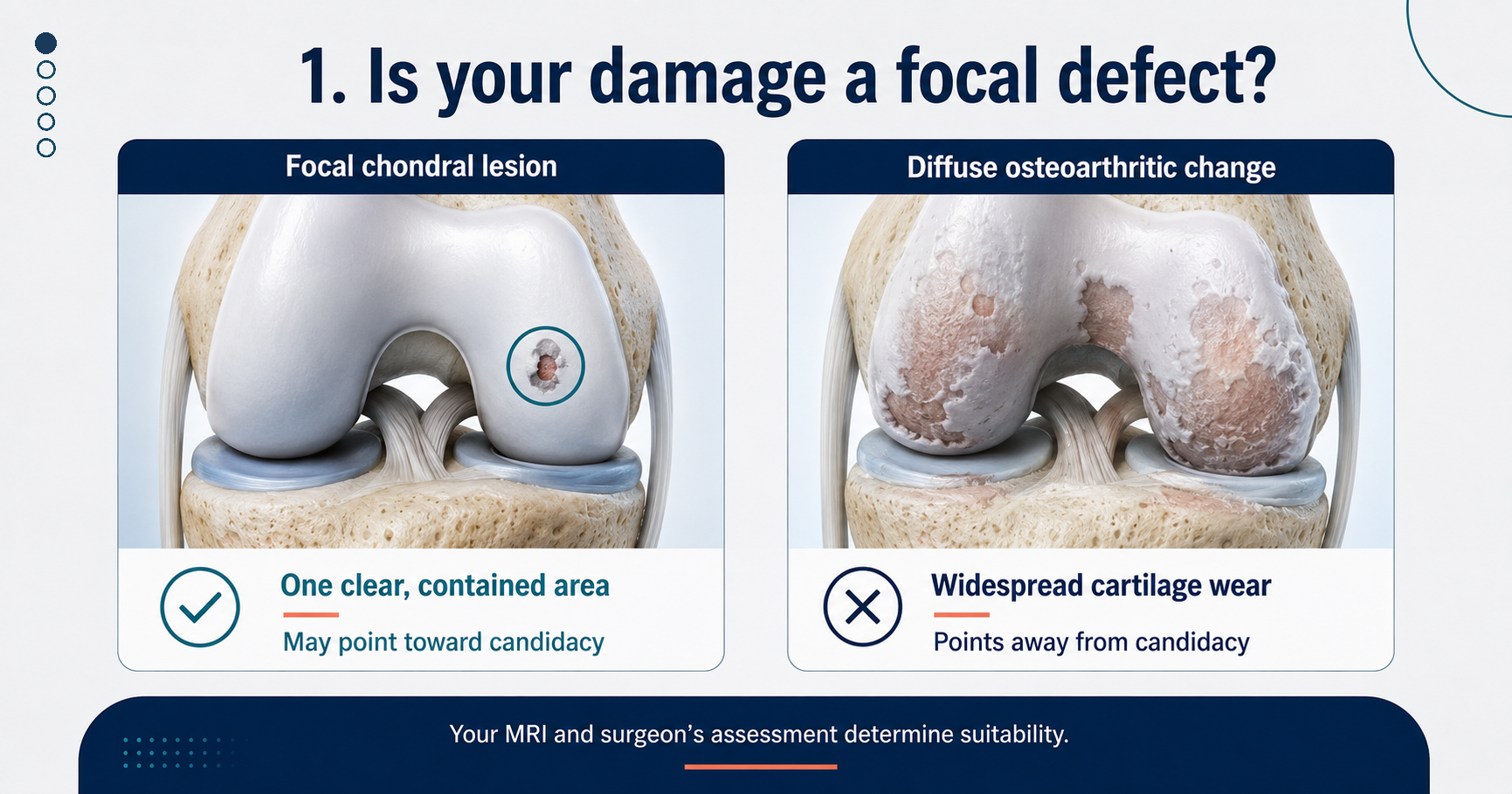
1. Have you been diagnosed with a focal cartilage defect rather than widespread osteoarthritis?
RECARTA is intended to treat a focal cartilage defect—a single, clearly defined and localized area of damage. This therapy is not intended for widespread osteoarthritis, where the cartilage has become thinner or is damaged across a large part of the joint. If your MRI report mentions a "focal chondral lesion or chondromaliatio" this may indicate that the treatment could be suitable for you. The phrase "diffuse osteoarthritic changes" generally suggests the opposite.
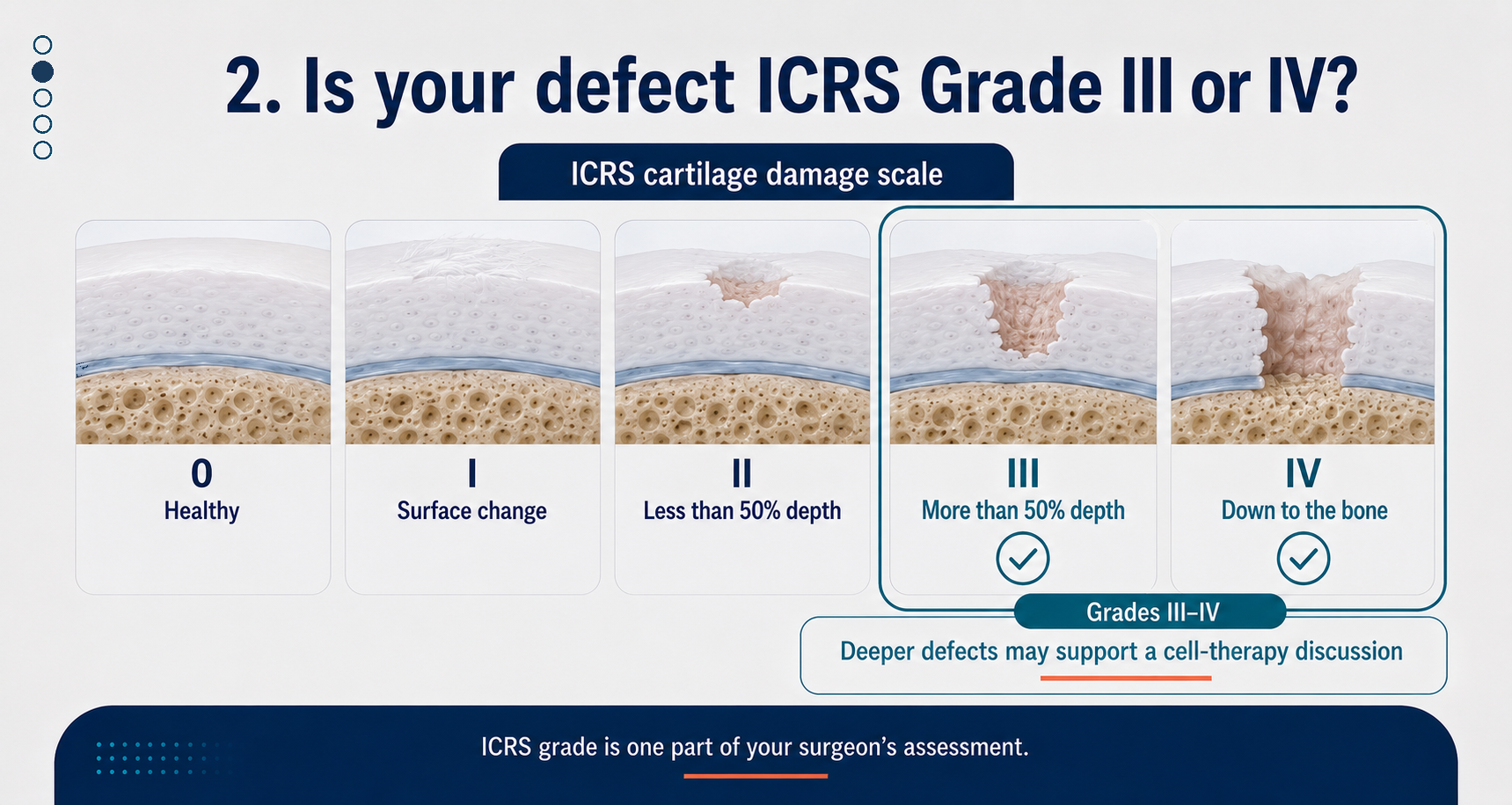
2. . Is your cartilage defect classified as ICRS grade III or IV?
Under the ICRS (International Cartilage Repair Sociaty) classification system, cartilage is graded from 0, indicating healthy cartilage, to grade IV, where the damage extends to the underlying bone. Cell therapy is generally most relevant for deeper grade III or IV defects that affect most or all the cartilage thickness. In such cases, simpler treatment methods do not always provide long lasting results.
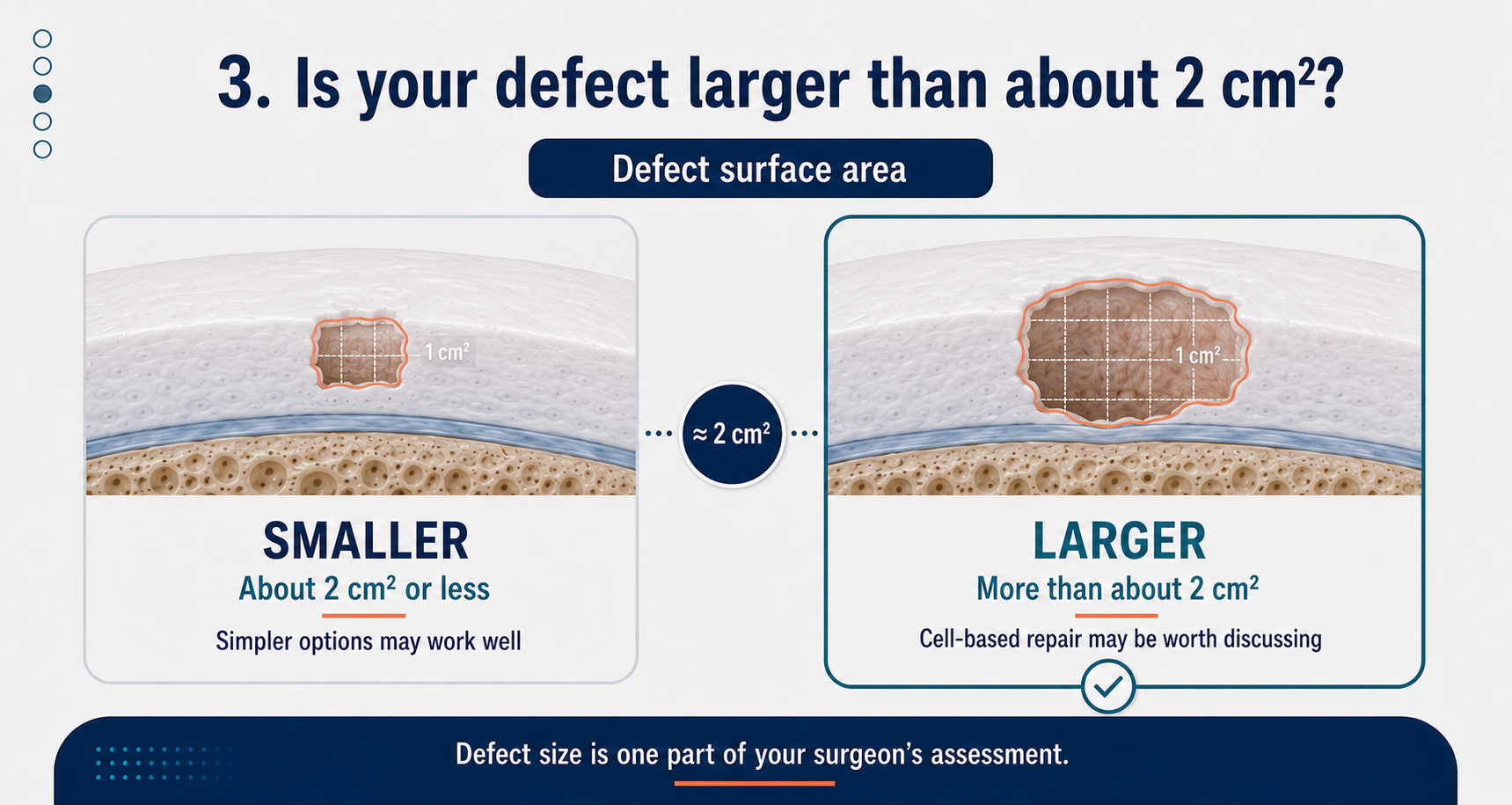
3. Is Your Defect Larger Than About 2 cm²?
The size of the defect is one of the most important factors when choosing a treatment. Smaller defects may be suitable for simpler procedures. However, when the affected area exceeds approximately 2 cm², a growing body of long-term evidence supports the benefits of cell-based cartilage restoration. If your doctor has said that your defect is larger than two square centimetres, it falls within the size range for which RECARTA may be considered as a treatment option.
4. Are you physically active and under 65 years of age?
The best candidates are generally physically active adults aged 35–65 who want to maintain their mobility and active lifestyle. Age is not an absolute criterion. It is equally important that the rest of the knee joint is in good condition and that the patient is prepared to follow the rehabilitation plan consistently. Proper rehabilitation creates favorable conditions for the new cartilage tissue to integrate and mature.
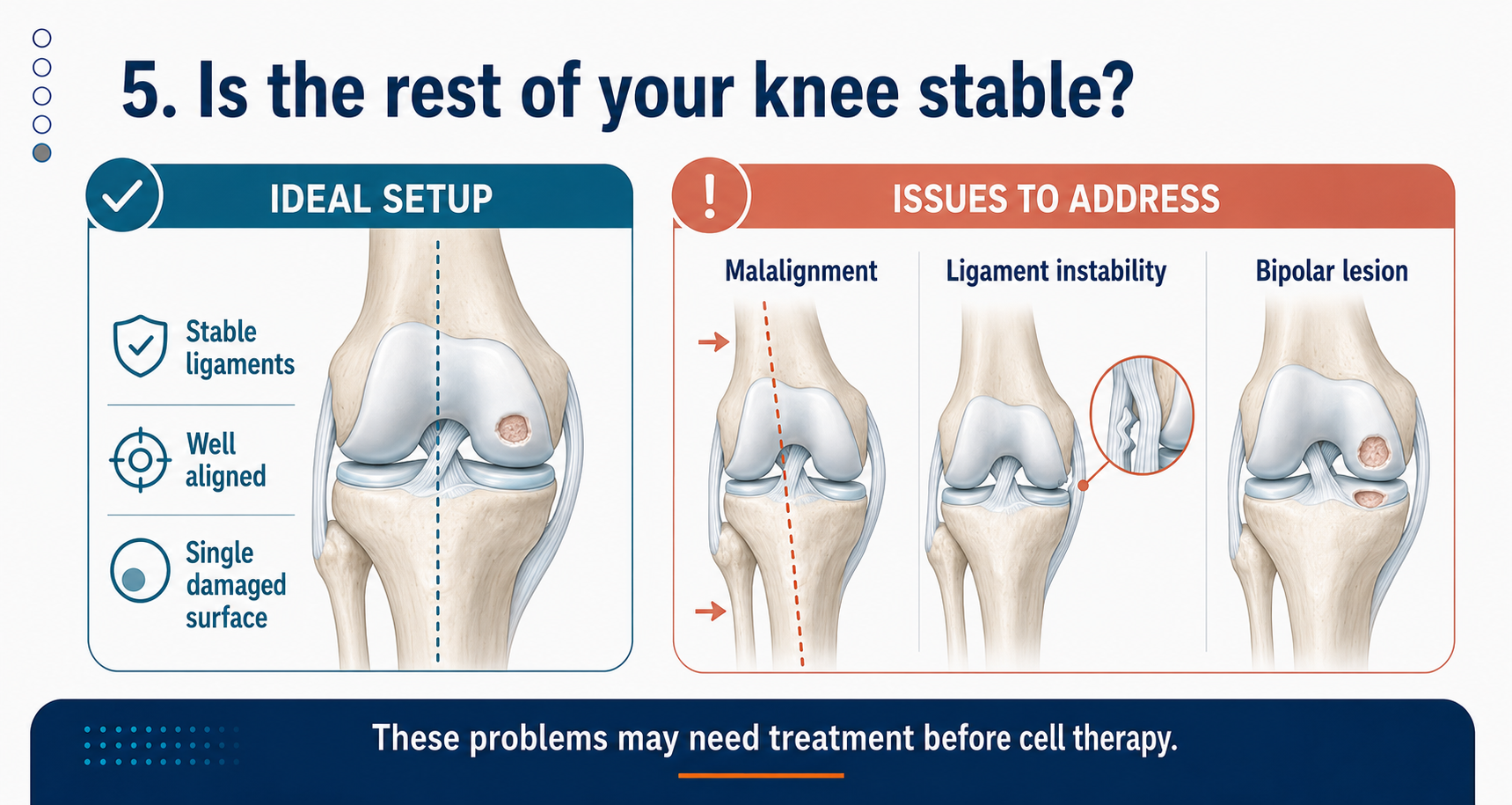
5. Is the Rest of Your Knee Stable?
Cartilage damage cannot be assessed in isolation from the other structures of the knee. If the knee is significantly misaligned, the ligaments are unstable, or both opposing articular surfaces are damaged, these problems may need to be addressed first. In some cases, they may make cell therapy unsuitable. The most favorable conditions for cartilage cell therapy are a stable, properly aligned knee in which only one surface is damaged. Your orthopedic surgeon will help you answer these questions.
Your Score
Your answers to these questions will help provide a preliminary assessment of your situation:
- 3 or more "yes" answers: RECARTA may be a suitable treatment option. The next step is an assessment of your eligibility.
- 1–2 "yes" answers: It is worth consulting an orthopaedic surgeon. They can explain what your imaging results show and which treatment options may be suitable.
- No "yes" answers or signs of osteoarthritis: Cell therapy is unlikely to be the most suitable treatment, but other options may be available. Discuss them with your doctor.
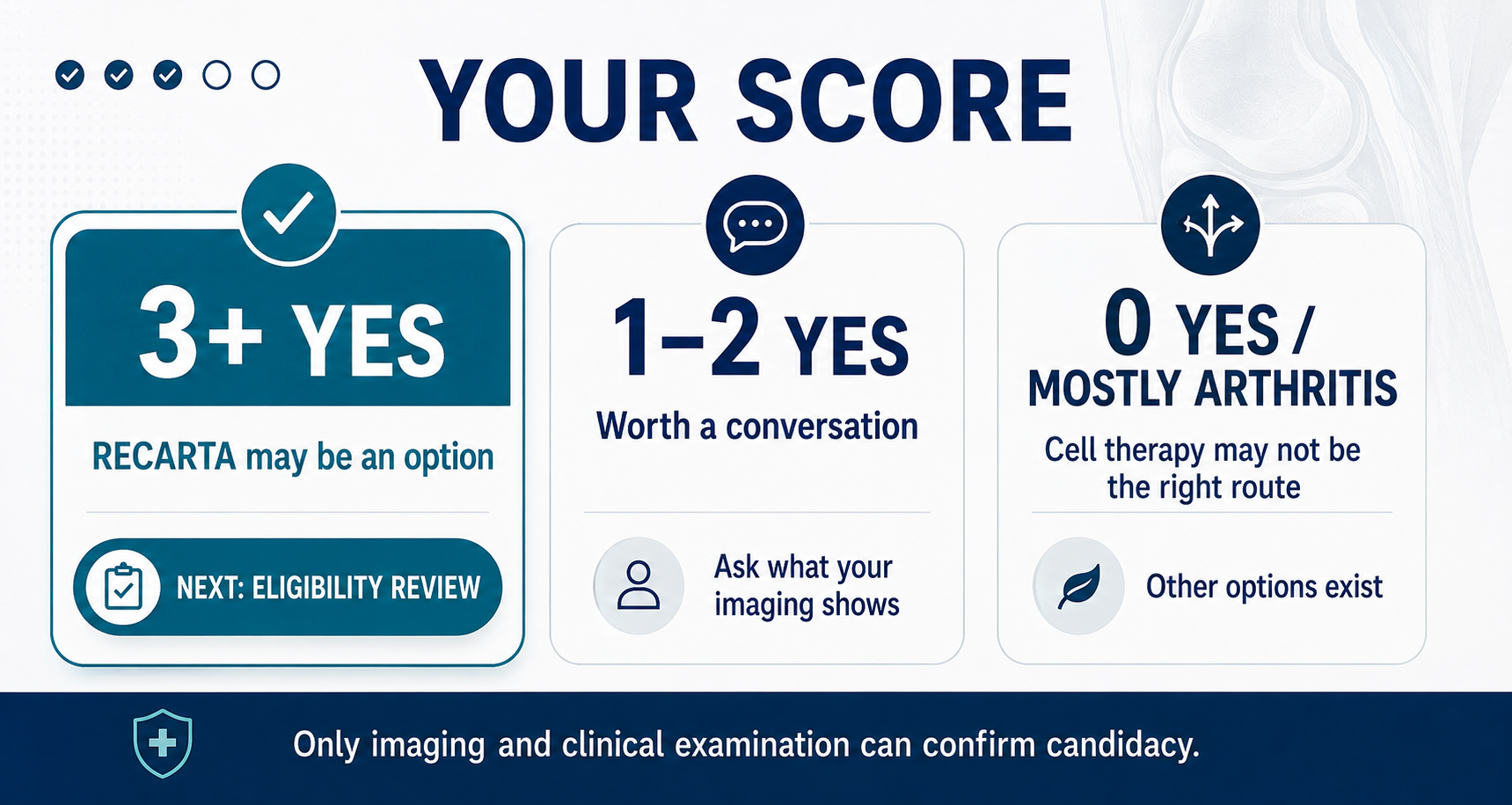
This checklist is not a substitute for medical consultation. Only an orthopaedic surgeon can confirm whether you are eligible for treatment after reviewing your imaging results and performing a clinical examination. However, in just a few minutes, this checklist can help you determine whether RECARTA is worth discussing with a specialist.
Frequently Asked Questions
Could the treatment be suitable for me if I already have signs of osteoarthritis?
Mild osteoarthritic changes do not necessarily mean that the treatment is unsuitable for you. The key considerations are whether you have a clearly defined focal cartilage defect and whether the rest of your knee joint is sufficiently healthy and stable.
Is there an age limit?
There is no strict age limit. However, physically active adults under approximately 65 years of age are generally considered the most suitable candidates. The treatment decision takes into account not only the patient's age but also the overall condition of the knee, activity level, and commitment to rehabilitation.
Who can confirm whether the treatment is suitable for me?
An orthopedic surgeon can confirm your eligibility for treatment after reviewing your MRI or other imaging results and performing a clinical examination.
What should I do if the checklist suggests that RECARTA is not suitable for me?
Other treatment options may be more appropriate for you. A consultation will help assess the available alternatives and identify the best course of action for your situation.
This article is for informational purposes only and does not constitute medical advice. All cartilage conditions should be assessed by a qualified orthopedic specialist. Individual presentations and treatment options vary.
→ Three or more apply? Find out if you are eligible — take the eligibility review at recarta.eu
About the Author
Justinas Maciulaitis, MD, PhD
Justinas Maciulaitis, MD, PhD — an orthopedic surgeon and translational research specialist with more than 15 years of experience in regenerative medicine. He is the founder and chief executive of KELI Therapeutics — an international advanced biotechnology company specializing in the development and manufacture of cell therapies for cartilage regeneration. His doctoral dissertation in translational regenerative medicine at the Lithuanian University of Health Sciences led to the development of RECARTA — an autologous and allogeneic chondrocyte therapy manufactured under Good Manufacturing Practice conditions, designed to treat focal cartilage defects of the knee. Dr. Maciulaitis has presented at international scientific conferences and contributed to translational research in the areas of cartilage repair, inflammation management, and cell therapy manufacturing.
Sources
- International Cartilage Repair Society. ICRS Cartilage Injury Evaluation Package. cartilage.org
- Brittberg M et al. Treatment of deep cartilage defects in the knee with autologous chondrocyte transplantation. N Engl J Med. 1994;331(14):889–895.
- Ebert JR et al. 10-Year Prospective Clinical and Radiological Evaluation After Matrix-Induced Autologous Chondrocyte Implantation. Am J Sports Med. 2024.
More Articles
Hyaline vs Fibrocartilage: Why Does Tissue Quality Matter So Much?
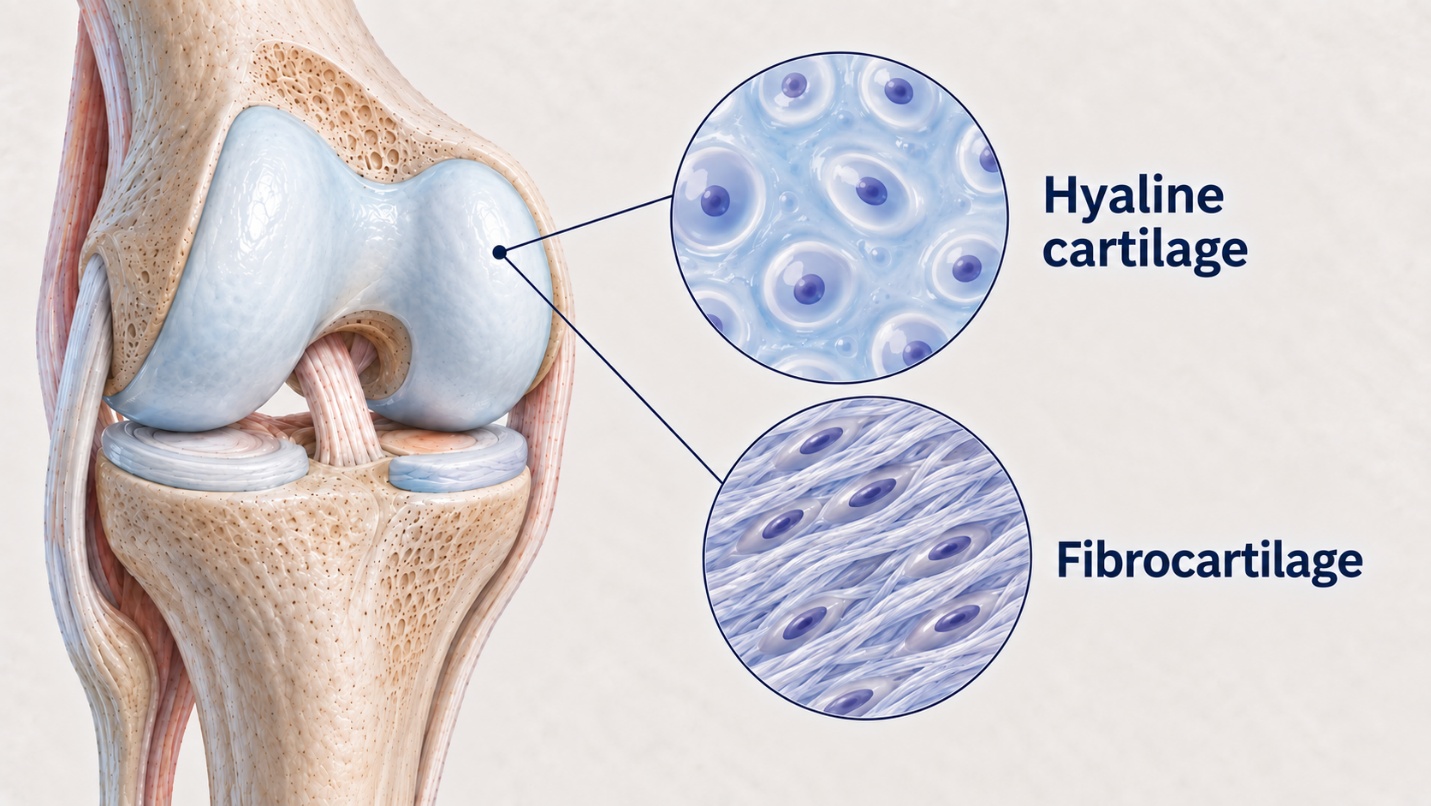
Two patients may undergo seemingly identical cartilage repair procedures, yet five years later their outcomes may be entirely different. This difference is often determined not by the surgeon who performed the procedure or by the patient’s efforts during rehabilitation, but by the type of tissue that formed after surgery. The damaged area may be repaired with hyaline cartilage of fibrocartilage. Although both are considered cartilage tissue, their structure, mechanical properties, and long – term durability differ significantly. This difference often determines whether the joint continues to function smoothly for many years or whether symptoms eventually return.

Inside Our GMP Lab: From Biopsy to Reimplantation
Between the two surgeries, cartilage cells spend approximately four weeks in a place patients do not normally visit – GMP (Good manufacturing practice) laboratory. For patients, this is perhaps the most mysterious stage of the entire treatment. So let us open the laboratory doors and take a closer look at what happens from biopsy collection to cell reimplantation.