
Hyaline vs Fibrocartilage: Why Does Tissue Quality Matter So Much?
Two patients may undergo seemingly identical cartilage repair procedures, yet five years later their outcomes may be entirely different. This difference is often determined not by the surgeon who performed the procedure or by the patient’s efforts during rehabilitation, but by the type of tissue that formed after surgery.
The damaged area may be repaired with hyaline cartilage of fibrocartilage. Although both are considered cartilage tissue, their structure, mechanical properties, and long – term durability differ significantly. This difference often determines whether the joint continues to function smoothly for many years or whether symptoms eventually return.
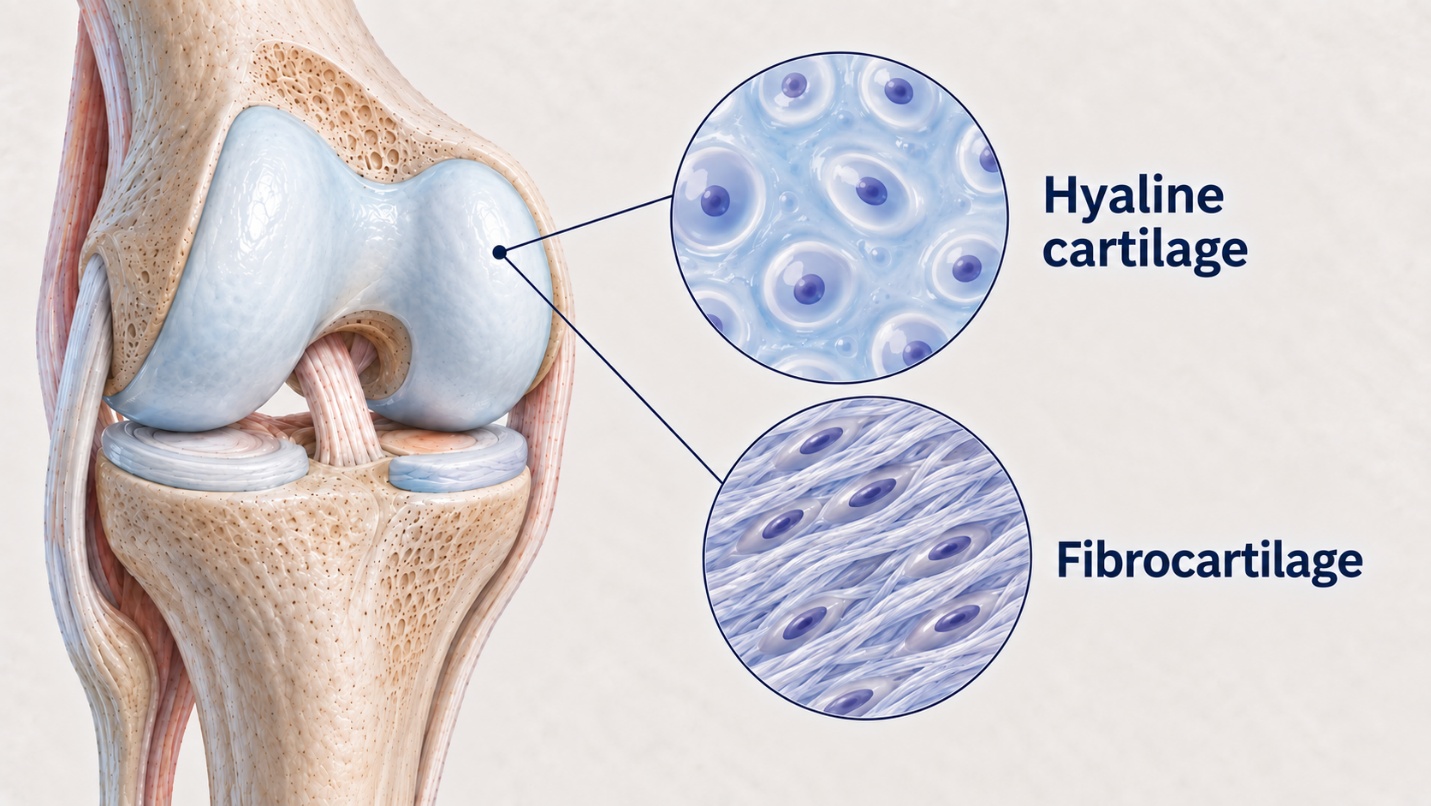
Hyaline Cartilage: The Joint’s Natural Surface
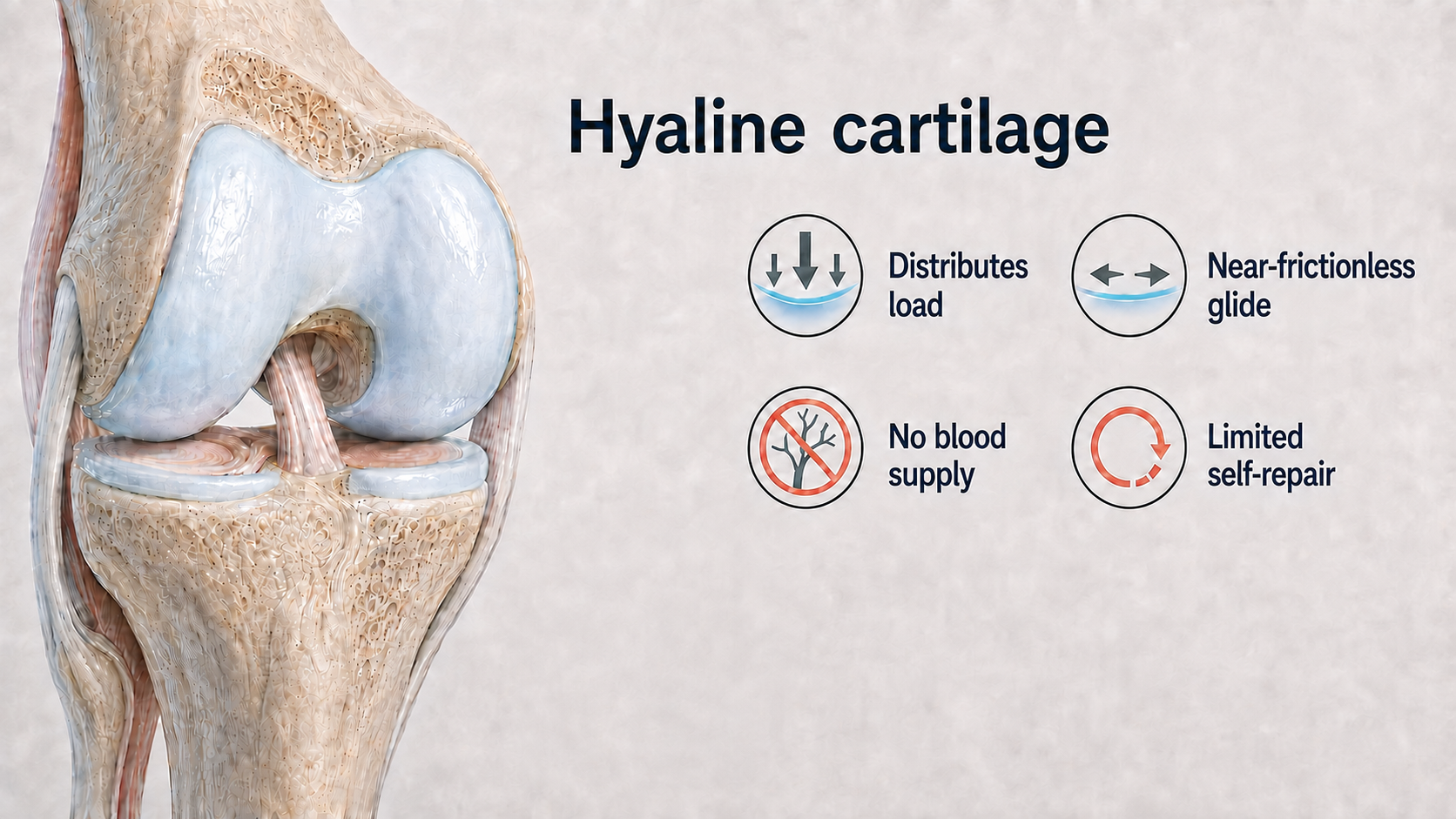
Hyaline cartilage is the smooth, glossy, glass – like tissue that covers the end of bones within a joint. It performs two essential functions exceptionally well: it distributes loads evenly across the joint and allows the joint to move with almost no friction.
This is the tissue that enables a healthy knee joint to move and withstand mechanical loads. However, once damaged, hyaline cartilage has almost no ability to repair itself. Its regenerative capacity is extremely limited because cartilage contains no blood vessels. As a result, the damaged area does not receive blood supply and regenerative cells required for the healing process, as seen in many other tissues.
Fibrocartilage: The Patch
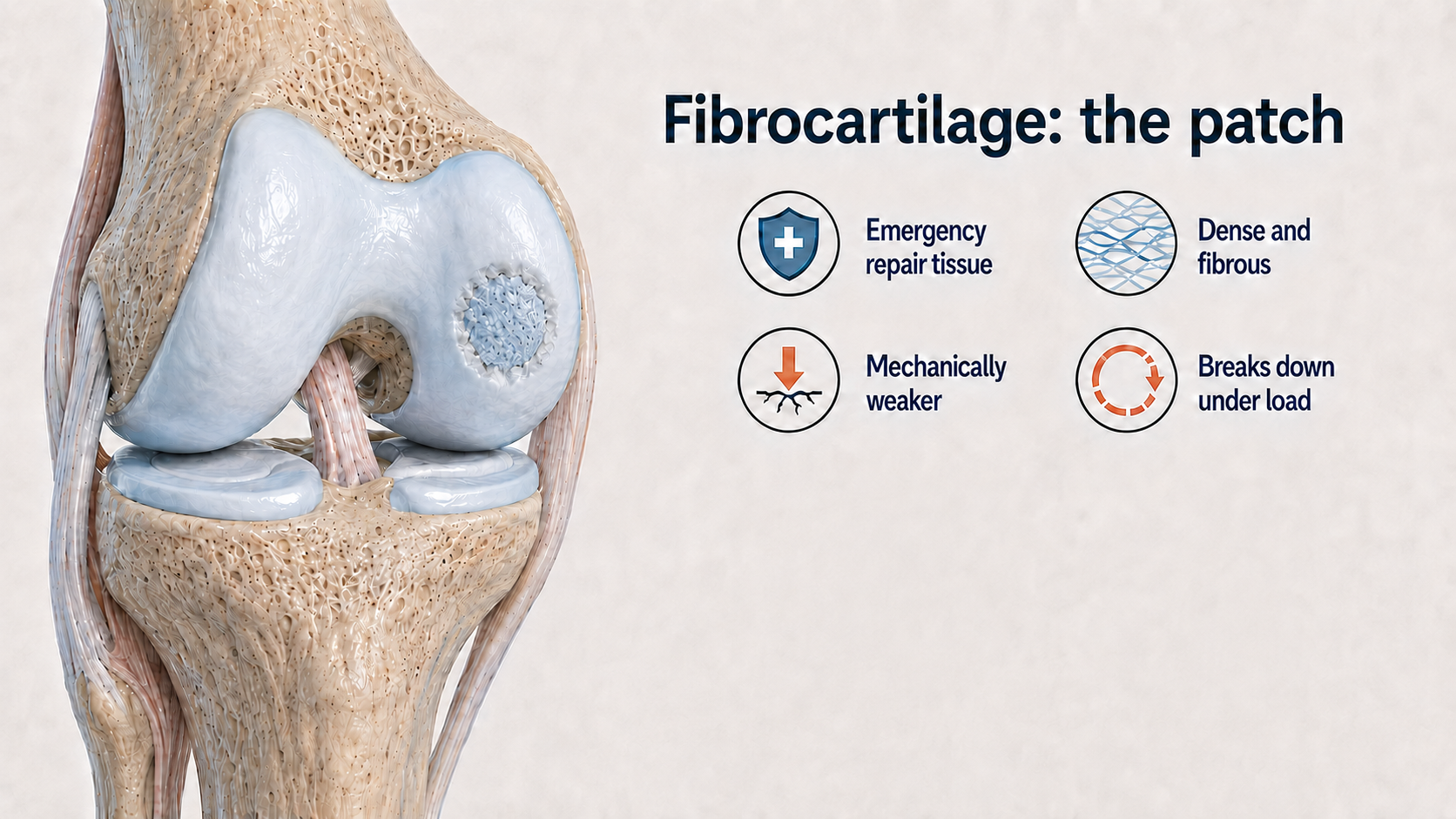
Fibrocartilage is replacement tissue formed by the body – a kind of emergency repair mechanism for damaged cartilage. It is more fibrous, less elastic, and mechanically weaker than hyaline cartilage.
This type of tissue commonly forms after a microfracture procedure, which stimulates the body’s natural healing response. Fibrocartilage fills the damaged area and may reduce symptoms and improve joint function for a period of time. However, it is not designed to withstand the same loads as natural hyaline cartilage for many years. Over time, it may soften, wear down, and begin to deteriorate.
The difference can be compared to an original – equipment tire and a spare tire. Both are round and both allow the car to move, but only the original tire is designed for long journeys.
Why Does Tissue Quality Determine The Outcome?
The properties of the tissue formed after a cartilage repair procedure determine how well the joint will withstand mechanical loads – not only over the next few years, but much further into the future. Tissue quality is therefore more than a technical detail of treatment; it is one of the most important factors affecting the long – term outcome.
Procedures that typically result in fibrocartilage can fill the damaged area relatively quickly, but the durability of this tissue is limited. This represents a compromise between faster initial healing and lower long – term resilience.
Procedures designed to restore hyaline cartilage or hyaline – like tissue, such as autologous chondrocyte implantation, require more time, more complex treatment, and a longer rehabilitation period. Their goal, however, is to form tissue whose structure and mechanical properties resemble those of natural articular cartilage as closely as possible.
This is precisely why cell therapy was developed. During this treatment, the patient’s own chondrocytes – the cells that produce cartilage – are collected and provided with the conditions needed to repair the damaged area. The aim is to form tissue that is not simply fibrocartilage, but tissue whose structure and function more closely resemble those of hyaline cartilage.
A Question Worth Asking Your Orthopedic Surgeon
When considering any cartilage repair procedure, ask your doctor:
“What type of tissue will form after this procedure, and how is it expected to withstand mechanical loads ten years from now?”
The answer will help you understand not only the nature of the proposed treatment, but also its likely long – term outcome.
When choosing a cartilage repair method, you are not choosing a procedure. You are choosing the tissue that will determine how you walk, run, and live in the future.
Frequently Asked Questions
Is restored hyaline-like tissue the same as natural hyaline cartilage?
Not exactly. It is a repair tissue whose structure and functional properties are intended to resemble natural hyaline cartilage as closely as possible. Although the two tissues are not completely identical, hyaline – like withstands long – term mechanical loads better than fibrocartilage.
Why can’t the body restore hyaline cartilage on its own?
Hyaline cartilage has a very limited capacity for self – repair. It contains no blood vessels, and there are relatively few cartilage – producing cells. These cells also have a limited ability to migrate into the damaged area. As a result, the effective healing process seen in many other tissues does not occur.
Does fibrocartilage always deteriorate?
No. For small defects located in areas exposed to lower loads, fibrocartilage may remain sufficient for longer period. The risk is greater when the defect is larger or located in heavily loaded part of the joint. Under these conditions, fibrocartilage may wear down more quickly and lose its mechanical properties.
How does RECARTA aim to restore hyaline-like tissue?
RECARTA uses a cell – based approach: the patient’s own chondrocytes – cartilage – producing cells – are collected, cultured in a laboratory, and implanted into the damaged area. The goal is to form tissue that is not ordinary fibrocartilage, but tissue whose structure and function more closely resemble natural hyaline cartilage.
This article is for informational purposes only and does not constitute medical advice. All cartilage conditions should be assessed by a qualified orthopaedic specialist. Individual presentations and treatment options vary.
→ Want tissue that lasts? Find out if RECARTA is right for your knee — take the eligibility review at recarta.eu
About the Author
Justinas Maciulaitis, MD, PhD
Justinas Maciulaitis, MD, PhD — an orthopedic surgeon and translational research specialist with more than 15 years of experience in regenerative medicine. He is the founder and chief executive of KELI Therapeutics — an international advanced biotechnology company specializing in the development and manufacture of cell therapies for cartilage regeneration. His doctoral dissertation in translational regenerative medicine at the Lithuanian University of Health Sciences led to the development of RECARTA — an autologous and allogeneic chondrocyte therapy manufactured under Good Manufacturing Practice conditions, designed to treat focal cartilage defects of the knee. Dr. Maciulaitis has presented at international scientific conferences and contributed to translational research in the areas of cartilage repair, inflammation management, and cell therapy manufacturing.
Sources
- Brittberg M et al. Treatment of deep cartilage defects in the knee with autologous chondrocyte transplantation. N Engl J Med. 1994;331(14):889–895.
- Ebert JR et al. 10-Year Prospective Clinical and Radiological Evaluation After Matrix-Induced Autologous Chondrocyte Implantation. Am J Sports Med. 2024.
- International Cartilage Repair Society. ICRS Cartilage Injury Evaluation Package. cartilage.org
Tags
More Articles
Inside Our GMP Lab: From Biopsy to Reimplantation
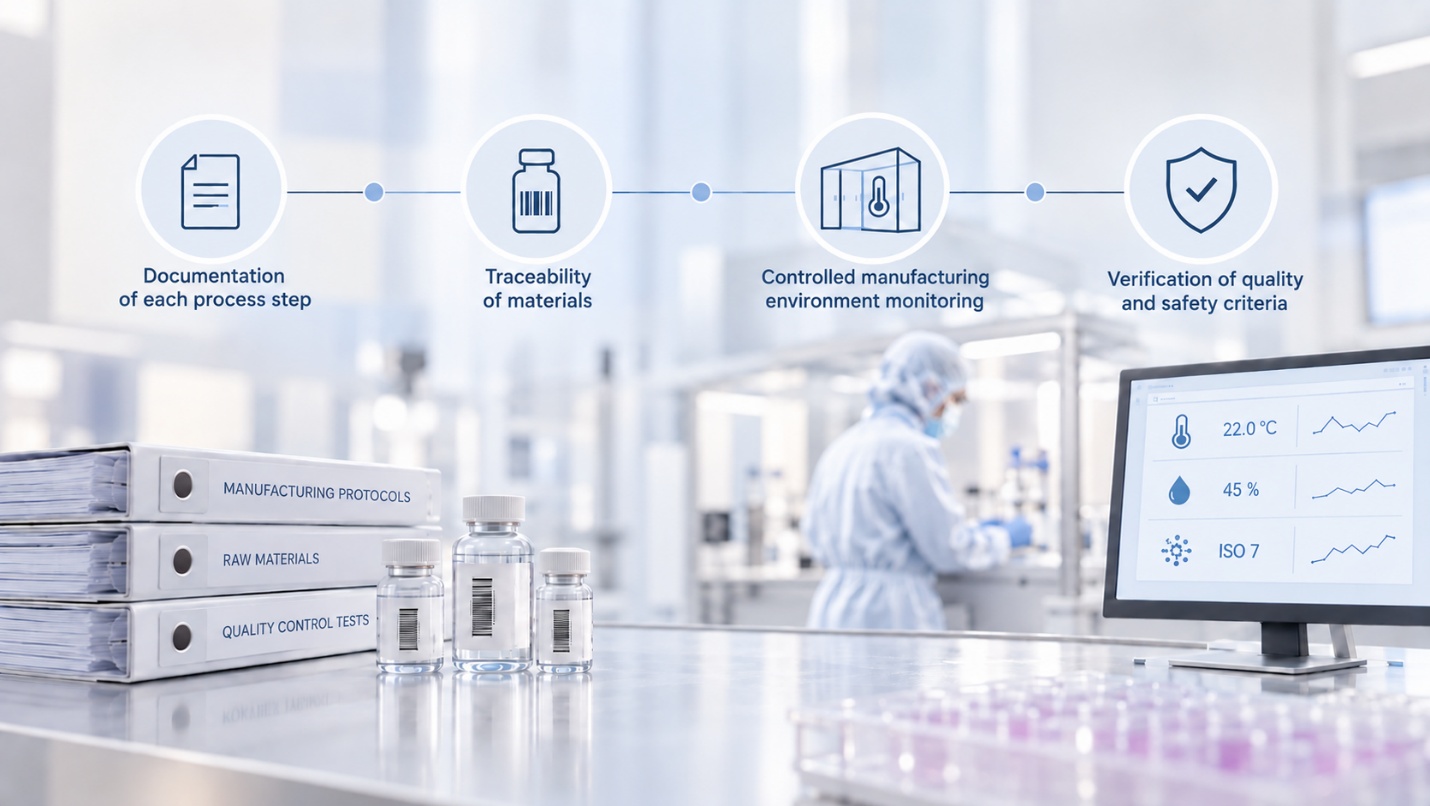
Between the two surgeries, cartilage cells spend approximately four weeks in a place patients do not normally visit – GMP (Good manufacturing practice) laboratory. For patients, this is perhaps the most mysterious stage of the entire treatment. So let us open the laboratory doors and take a closer look at what happens from biopsy collection to cell reimplantation.
Stage 1, Stage 2: The Complete RECARTA Journey
When considering cartilage cell therapy, the greatest concern is often not the treatment itself, but the uncertainty. Two surgeries instead of one, waiting in between, and the process taking place in a specialized laboratory that the patient does not see. When you don't know what's happening at each stage, doubting and worrying is completely natural. Therefore, we present the entire RECARTA treatment process – clearly and consistently, from the first consultation to rehabilitation.